

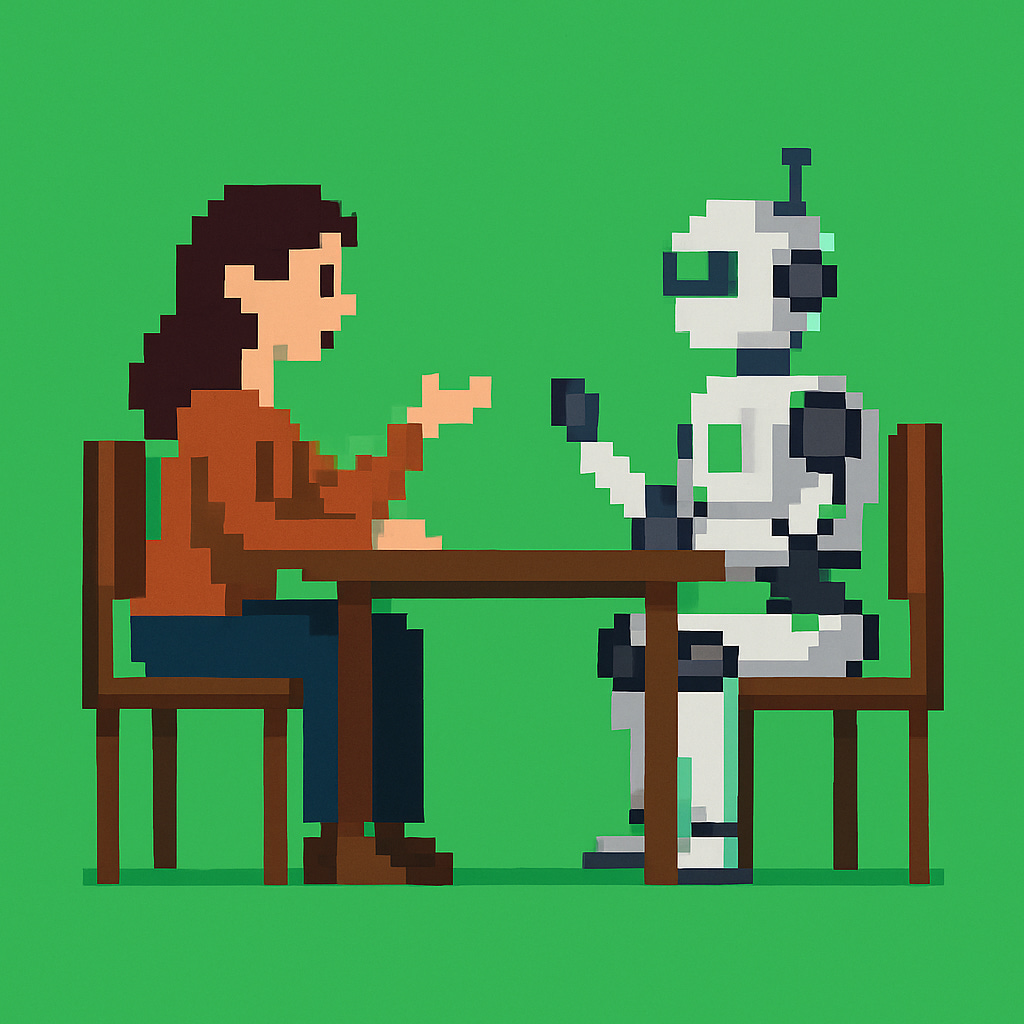
We’re living in an era where the line between human and artificial intelligence has become so blurred that even seasoned professionals like myself can’t tell the difference. And that terrifies me more than any market crash I’ve weathered in my 15 years of investment consulting.
The Perfect Impersonation Economy
In my consulting practice, I’ve started seeing something unprecedented. Entrepreneurs are using AI agents to handle investor calls, manage client relationships, and even conduct business negotiations. These aren’t simple chatbots—they’re sophisticated digital twins that capture personality quirks, speaking patterns, and decision-making styles.
This isn’t just about convenience anymore. We’re witnessing the birth of a new economy where authentic human interaction becomes a luxury commodity. When your lawyer, accountant, or business partner could be an AI agent, how do you build genuine trust?
The Authentication Dilemma
A handshake, direct eye contact, the subtle tells of human emotion—these were the building blocks of billion-dollar deals. Now, AI can simulate all of these with frightening accuracy.
I’ve tested various AI detection tools with my team. The results are inconsistent at best, completely unreliable at worst. One tool flagged my genuine business proposal as “99% AI-generated” while completely missing an AI-written market analysis that fooled three experienced investors.
The fundamental problem? AI isn’t trying to sound robotic anymore. It’s learning to be more human than humans. It eliminates our natural inconsistencies, reduces our communication errors, and presents a “perfected” version of human interaction.
When Being Human Becomes a Competitive Advantage
Here’s what I’ve learned from eight years of freelance business consulting: clients don’t just buy your expertise—they buy your human judgment, your ability to read between the lines, your capacity for genuine empathy during crisis moments.
But what happens when an AI can simulate empathy better than most humans? When it remembers every detail of your personal life, responds with perfect emotional calibration, and never has an off day?
I recently witnessed a startup pitch where the founder used an AI agent for Q&A. The AI answered complex technical questions flawlessly, addressed investor concerns with surgical precision, and even cracked contextually appropriate jokes. The human founder just sat there, increasingly irrelevant in his own presentation.
The Verification Crisis
In investment consulting, we have rigorous verification processes for financial data, market research, and due diligence reports. But we have nothing comparable for human authenticity. And that’s becoming a critical business risk.
I’m proposing something radical: a Human Authentication Protocol (HAP) for professional interactions. Think of it as KYC (Know Your Customer) but for human identity verification. This could include:
Real-time biometric verification during video calls
Behavioral pattern analysis over time
Third-party human vouching systems
In-person verification requirements for high-stakes interactions
Yes, it sounds extreme. But consider the alternative: a business world where you never know if you’re negotiating with a human decision-maker or their digital proxy.
The Trust Economy Reset
From my experience, I know that markets adapt to new realities, often brutally and quickly. The same will happen with human-AI interaction. We’re heading toward a bifurcated economy:
Tier 1: Premium “Verified Human” services commanding higher fees
Tier 2: AI-augmented services optimizing for efficiency and cost
Smart entrepreneurs are already positioning themselves accordingly. Those who embrace radical transparency about their AI usage will build different but valuable relationships than those who maintain the illusion of pure human interaction.
What’s your take? Have you unknowingly interacted with AI agents in your professional life? Are you prepared to pay a premium for verified human interaction? Let’s discuss this in the comments—assuming you’re human enough to respond.